
Play Rise of Olympus Now!
Home → Similar Games
Games Similar to Rise of Olympus
Games close to Rise of Olympus
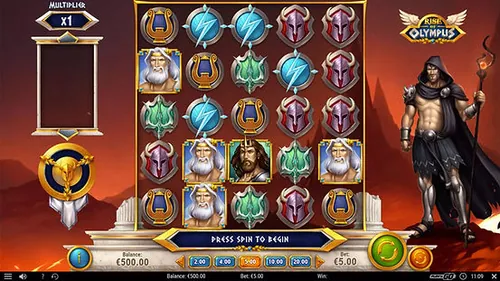
Rise of Olympus features a 5x5 reel layout with Cluster Pays mechanics and an increasing multiplier on consecutive drops, which allows for significant win potential during single spins. This grid structure differs from Book of Dead, which utilizes a standard 5x3 reel layout with traditional paylines, offering a different visual experience for players who prefer classic slot formats over modern cluster-based wins. The distinct layout influences how symbols interact, creating unique opportunities for chain reactions that are absent in linear payline games.
The maximum win cap for Rise of Olympus stands at 5000x the total stake, providing a clear upper limit for player returns on any given betting session. Reactoonz offers a similar high volatility experience but operates on a larger 7x7 grid, which changes the frequency of clusters compared to the tighter 5x5 arrangement found in Rise of Olympus. Both titles share Play'n GO as their developer, ensuring comparable technical performance and feature depth despite the differences in grid dimensions and symbol grouping logic.
Play'n GO released Rise of Olympus in 2019, establishing a specific era of Greek mythology-themed slots that emphasize mythological figures like Zeus, Hades, and Poseidon as key bonus triggers. Legacy of Dead also comes from Play'n GO and shares a similar thematic focus on ancient history, though it employs a 5x3 reel layout rather than the expanding grid mechanic seen in Rise of Olympus. This shared studio background means both games utilize similar audio-visual quality standards and mathematical models designed for long-term engagement.
Titles with similar maths
Rise of Olympus has a theoretical RTP of 96.50%, meaning the game returns 96.50 cents for every euro wagered over millions of spins, leaving a house edge of 3.50%. Tome of Madness offers a slightly higher return at 96.59% RTP, which mathematically reduces the casino's advantage by 0.09 percentage points compared to Rise of Olympus over the long run. Players seeking marginally better theoretical returns might prefer Tome of Madness, although the max win cap is lower at 2000x versus the 5000x potential in Rise of Olympus.
The volatility rating for Rise of Olympus is classified as high, indicating that wins occur less frequently but tend to be larger when they do happen, aligning with the 96.50% RTP figure provided. Reactoonz 2 also carries a high volatility classification, suggesting a similar risk-reward profile where players must endure dry spells before hitting significant multipliers or cluster formations. This shared volatility trait means bankroll management strategies should remain consistent across both titles to withstand the inevitable variance in outcomes.
Book of Dead features a maximum win potential of 5000x, which matches the exact top prize limit available in Rise of Olympus, making them comparable in terms of peak payout capability. However, Book of Dead has an RTP of 96.21%, which is 0.29 percentage points lower than the 96.50% return rate of Rise of Olympus, resulting in a slightly higher long-term cost for the player. This difference in return percentages highlights that while max wins are identical, the underlying mathematical fairness favors Rise of Olympus over Book of Dead.
Same studio alternatives
Play'n GO developed Rise of Olympus, a title known for its innovative Cascade feature where winning symbols disappear and new ones fall into place, driving the increasing multiplier upward. Reactoonz is another Play'n GO creation that uses a similar cascade mechanic but applies it to a 7x7 grid, offering more space for complex cluster interactions than the 5x5 setup in Rise of Olympus. Both games rely on the same engine logic for symbol evaluation, ensuring a consistent user interface and smooth gameplay experience regardless of the grid size chosen.
Legacy of Dead is produced by Play'n GO and shares the studio's signature high volatility profile, similar to the risk level experienced in Rise of Olympus during bonus rounds. While Rise of Olympus focuses on Greek gods and cluster pays, Legacy of Dead explores Egyptian themes with a traditional 5x3 reel layout, providing a stark contrast in aesthetic presentation. Despite these thematic differences, both titles maintain the same rigorous standards for fair play and mathematical integrity established by the developer since its inception.
Tome of Madness is a Play'n GO release that mirrors the 5x5 reel layout of Rise of Olympus, allowing for direct comparison of grid dynamics and symbol placement probabilities. With an RTP of 96.59%, Tome of Madness offers a marginally better theoretical return than the 96.50% RTP of Rise of Olympus, appealing to mathematically focused players. The developer ensures that all these titles undergo strict auditing, guaranteeing that the stated RTP figures are accurate reflections of the game's long-term performance.
Rise of Olympus 100 is a variant from Play'n GO that retains the 5x5 grid structure but increases the maximum win potential to 15,000x, significantly exceeding the 5000x cap of the original. This alternative version maintains the same high volatility characteristic, ensuring that the risk profile remains intense even with the expanded payout ceiling. Players interested in higher stakes can choose this variant while still enjoying the core cascade mechanics and Greek mythology theme that define the Rise of Olympus franchise.
Comparable volatility
Rise of Olympus exhibits high volatility, a characteristic confirmed by its 96.50% RTP and the design of its cascade feature which rewards patience with larger, less frequent payouts. Reactoonz shares this high volatility status, utilizing a 7x7 grid to create extended sequences of cascading wins that can rapidly escalate multipliers during single spins. This similarity means that players accustomed to the swingy nature of Rise of Olympus will find the emotional rhythm of Reactoonz familiar, despite the difference in grid dimensions.
Book of Dead is categorized as having high volatility, matching the risk level of Rise of Olympus where sessions can end without major wins unless lucky streaks occur. The 5000x max win in Book of Dead equals the 5000x cap in Rise of Olympus, proving that both games target the same high-risk, high-reward demographic of slot enthusiasts. Players managing their bankrolls should expect similar drawdowns in both titles, requiring sufficient funds to survive the dry periods inherent to high-variance gameplay.
Reactoonz 2 continues the legacy of high volatility within the Play'n GO portfolio, maintaining the intense pace seen in Rise of Olympus through its quantum leap features and multipliers. With a maximum win of 5083x, Reactoonz 2 offers a slightly higher ceiling than the 5000x limit in Rise of Olympus, providing an extra margin for potential profit. This comparable volatility ensures that strategic approaches based on hit frequency and win size remain valid across both games, allowing for seamless transitions between titles.
Comparable return figures
The Return to Player percentage for Rise of Olympus is fixed at 96.50%, representing the theoretical long-term average return over hundreds of thousands of spins as defined by industry standards. Reactoonz provides a very close comparative figure with an RTP of 96.51%, differing by only 0.01 percentage point, which makes them nearly identical in terms of expected value for the player. This minimal difference suggests that either game can be selected based on preference for theme or grid size without significantly impacting the long-term cost of play.
Legacy of Dead boasts an RTP of 96.58%, which is 0.08 percentage points higher than the 96.50% return rate of Rise of Olympus, offering a slight mathematical advantage. Both titles share the same developer, Play'n GO, ensuring that the regulatory compliance and auditing processes behind these RTP figures are consistent and reliable for all players. Choosing Legacy of Dead over Rise of Olympus yields a marginal improvement in theoretical retention, though the practical impact over short sessions remains negligible due to volatility.
Tome of Madness features an RTP of 96.59%, standing as the highest among the compared titles against the 96.50% RTP of Rise of Olympus, thus minimizing the house edge most effectively. This 0.09 percentage point difference represents the best value proposition among the listed options for players focused on maximizing theoretical returns per unit wagered. Despite this superior RTP, players must still account for the high volatility and the 2000x max win cap, which limits the absolute payout potential compared to Rise of Olympus.
Rise of Olympus compared with similar titles
| Game | Studio | RTP | Volatility | Max win |
|---|---|---|---|---|
| Rise of Olympus | Play'n GO | 96.50% | high | 5000x |
| Alles Spitze | Merkur (developed by edict e-gaming under the Merkur/Gauselmann brand) | 90.85% | high | 500x |
| Book of Dead | Play'n GO | 96.21% | high | 5000x |
| Big Bass Splash | Pragmatic Play | 96.71% | high | 5000x |
| Le Cowboy | Hacksaw Gaming | 96.28% | medium | 25000x |
| The Dog House Megaways | Pragmatic Play | 96.55% | very high | 12305x |
| Wild Bounty Showdown | PG Soft (Pocket Games Soft) | 96.75% | medium | 5000x |
How these titles differ
Rise of Olympus from Play'n GO utilizes a 5x5 grid with Cluster Pays mechanics, differing significantly from the traditional payline structures found in other slots. This layout allows symbols to win by touching horizontally or vertically rather than forming lines across reels. Consequently, players must adapt their strategy to focus on adjacent symbol groups instead of fixed paths.
Big Bass Splash by Pragmatic Play operates on a simpler 5x3 reel setup compared to the wider field of Rise of Olympus. The latter's All Ways system provides more potential winning combinations per spin due to the expanded grid width. This structural difference means cluster wins occur more frequently but often require specific symbol placements to trigger bonuses.
The Dog House Megaways introduces a dynamic row count ranging from two to seven rows, contrasting sharply with the static 5x5 design of Rise of Olympus. While Megaways games change their reel structure every spin, Rise of Olympus maintains a consistent layout for predictable volatility management. Players seeking variable grid sizes might prefer the former, whereas those wanting stability choose the latter.
Feature sets side by side
Rise of Olympus features an increasing multiplier that grows with consecutive cluster drops, a mechanic distinct from the free spins found in Big Bass Splash. This multiplier can reach high values during successful chains, directly amplifying payouts without requiring separate bonus rounds. Such a system rewards sustained engagement with continuous cascading wins rather than isolated feature triggers.
Le Cowboy by Hacksaw Gaming offers a medium volatility profile with a max win of 25000x, providing a different risk-reward balance than Rise of Olympus. The latter's high volatility and 5000x cap mean wins are less frequent but potentially substantial through multiplier chains. Players tolerant of dry spells may find Le Cowboy's steadier returns more appealing than the volatile nature of Rise of Olympus.
Wild Bounty Showdown from PG Soft employs a diamond-shaped reel layout that influences symbol distribution differently than the standard square grid of Rise of Olympus. This unique arrangement affects how clusters form and interact with multipliers compared to the symmetrical playfield of Rise of Olympus. Understanding these layout differences helps players adjust their bet sizing strategies accordingly.
Payout ceilings compared
Rise of Olympus caps its maximum win at 5000x the total stake, a limit defined by Play'n GO's game mathematics. This ceiling applies regardless of how high the multiplier climbs during consecutive cluster drops in the base game. Players chasing extreme jackpots might look elsewhere, as this cap restricts the absolute payout potential despite the high volatility.
The Dog House Megaways allows for a significantly higher maximum win of 12305x, nearly double the ceiling found in Rise of Olympus. This larger cap compensates for the game's very high volatility and changing reel structures by offering greater upside potential. Consequently, players accepting higher variance may prefer the higher ceiling over the more constrained limits of Rise of Olympus.
Le Cowboy stands out with an exceptionally high max win of 25000x, far exceeding the 5000x limit of Rise of Olympus. This massive potential attracts players willing to endure medium volatility swings for a chance at life-changing sums. In contrast, Rise of Olympus offers a more modest ceiling suited for players prioritizing frequent multiplier activations over rare huge wins.
Bet ranges compared
Rise of Olympus allows stakes starting from a minimum bet, typically low enough for casual play, up to a maximum limit set by the operator. This range accommodates both small bankrolls and high rollers seeking to maximize exposure to the increasing multiplier feature. Adjusting bets within this range directly impacts the size of potential cluster wins relative to the stake.
Alles Spitze by Merkur presents a different betting structure with a high volatility profile and a lower max win of 500x. Its bet range might be narrower or structured differently to align with its classic slot heritage and lower payout ceiling. Players comparing value will note that Rise of Olympus offers higher potential returns for similar wagering levels due to its 5000x cap.
Zeus vs Hades by Pragmatic Play shares a 5x5 layout with Rise of Olympus but differs in its specific volatility and win potential. While exact bet ranges vary by casino, the structural similarity allows for direct comparison of risk per spin against Rise of Olympus. Understanding these parameter differences helps players select the game that best fits their preferred betting intensity and risk tolerance.
Which suits which player
Players who enjoy strategic depth in cluster mechanics will appreciate Rise of Olympus for its escalating multiplier system. The requirement to build consecutive drops adds a layer of engagement beyond simple symbol matching. This appeals to those who like to influence outcomes through pattern recognition rather than relying solely on luck.
High-risk seekers might find the 5000x max win of Rise of Olympus insufficient compared to the 25000x potential of Le Cowboy. Those preferring steady, smaller wins may opt for games with lower volatility profiles like Le Cowboy's medium setting. Rise of Olympus sits in a high-volatility niche, balancing risk with the thrill of growing multipliers.
Budget-conscious gamers may prefer Rise of Olympus due to its accessible entry point and transparent RTP of 96.50%. This theoretical return suggests better long-term value retention compared to slots with significantly lower percentages. Players aiming to extend their session time while engaging with complex features will find this balance suitable.
Trying alternatives in demo
Rise of Olympus by Play'n GO features a theoretical RTP of 96.50%, which defines the long-term return expectation for players engaging with this high volatility slot machine. This percentage indicates that over extended sessions, the game retains a house edge of 3.50% from all wagers placed by users on the platform. Players testing the demo version experience the 5x5 grid mechanics without financial risk, allowing them to understand the cluster pays system before committing real funds.
The maximum win potential in Rise of Olympus stands at 5000x the total bet, offering substantial rewards compared to lower-paying titles like Buffalo which caps at 1200x. This significant multiplier ceiling appeals to high volatility seekers who prefer larger, less frequent payouts over steady small wins found in medium volatility games. Understanding these limits helps players manage their expectations and bankroll effectively when transitioning from free play to real money rounds on the site.
Sizzling Hot Deluxe offers an RTP of 95.66%, providing a slightly lower theoretical return than the 96.50% found in Rise of Olympus by Play'n GO. Comparing these figures highlights why players might choose the Greek mythology-themed slot for better long-term value despite its higher volatility and complex dropping symbols feature. Analyzing such differences allows gamblers to make informed decisions about which titles fit their specific risk tolerance and strategic goals during gameplay sessions.
Why variety helps bankroll
Sweet Bonanza Super Scatter presents an RTP of 96.51%, which is marginally higher than the 96.50% return of Rise of Olympus by Play'n GO. Switching between these high volatility slots can help players balance variance, as Sweet Bonanza allows wins up to 50000x while Rise of Olympus caps at 5000x. Diversifying play across different max win potentials prevents rapid bankroll depletion during unlucky streaks common in high volatility environments.
Le King from Hacksaw Gaming offers a medium volatility profile with an RTP of 96.14%, contrasting sharply with the high volatility nature of Rise of Olympus. Playing Le King provides more frequent smaller wins due to its medium volatility, which helps stabilize the bankroll between the intense, rare big hits of the Greek myth slot. This strategic mix allows players to sustain longer session times while chasing the massive 20000x max win potential available in the Hacksaw title.
Pirots by ELK Studios features a low RTP of 94.00%, significantly below the 96.50% return of Rise of Olympus, making it a less favorable option for long-term play. However, its medium-high volatility and 10,000x max win cap offer a different risk-reward dynamic that some players may find appealing for short bursts. Understanding these distinct mathematical profiles ensures that players allocate their funds wisely across games with varying house edges and payout structures.
Studios worth knowing
Play'n GO developed Rise of Olympus, releasing this 5x5 cluster pay slot in 2019 with a specific focus on high volatility and a 5000x maximum win cap. The studio's design philosophy emphasizes increasing multipliers on consecutive drops, creating a unique mechanic that distinguishes it from standard reel-spinning games in their portfolio. Knowing Play'n GO helps players anticipate the pacing and feature triggers within this specific title and other releases from the same developer.
Aristocrat Gaming created Buffalo, a slot with a medium-high volatility rating and an RTP of 94.85%, featuring a 5x4 reel layout and a 1200x max win limit. This title serves as a benchmark for comparing traditional slot mechanics against the innovative cluster pays system introduced by Play'n GO in their later releases. Recognizing Aristocrat's approach aids players in understanding the evolution of slot design and the shift towards more complex interactive features in modern gaming.
Novomatic produced Sizzling Hot Deluxe, which maintains an RTP of 95.66% and a medium volatility setting across its 5x3 reels, capping wins at 5000x. This classic fruit-machine style contrasts with the advanced graphical and mechanical depth of Rise of Olympus, highlighting the diverse range of experiences available from different studios. Identifying Novomatic's traditional output helps players contextualize the technological advancements seen in newer releases from developers like Play'n GO and Pragmatic Play.
Newer releases in the genre
Sweet Bonanza Super Scatter by Pragmatic Play introduces a 6x5 grid with high volatility and an impressive RTP of 96.51%, surpassing the 96.50% return of Rise of Olympus. This title offers a massive 50000x max win potential, far exceeding the 5000x cap found in the Play'n GO slot, attracting players seeking extreme payout possibilities. The scatter-logic mechanic differs significantly from the cluster pays system, offering a fresh alternative for those familiar with the Greek mythology theme of Rise of Olympus.
Hacksaw Gaming released Le King, a 6x5 slot with medium volatility and an RTP of 96.14%, providing a higher return than Pirots but lower than Rise of Olympus. With a max win of 20000x, it bridges the gap between moderate stakes and high reward, appealing to players who find the 5000x cap of Rise of Olympus too limiting. The distinct visual style and bonus features of Le King demonstrate how newer studios innovate beyond traditional frameworks while maintaining competitive theoretical returns for players.
ELK Studios crafted Pirots, featuring a 5x5 layout with medium-high volatility and a notably low RTP of 94.00%, which is substantially worse than the 96.50% of Rise of Olympus. Despite the inferior return, the 10,000x max win cap offers a compelling reason for risk-tolerant players to try this title alongside more statistically favorable options. Comparing Pirots to Rise of Olympus illustrates the trade-off between volatility, max win potential, and long-term expected value in contemporary slot design.
Picking your next title
When evaluating Rise of Olympus, the 96.50% RTP and 3.50% house edge provide a clear baseline for expected long-term performance compared to other high volatility slots. The 5000x max win limit suggests that players should budget for extended dry spells typical of high variance games, unlike lower-capped titles such as Buffalo with its 1200x limit. Understanding these parameters helps players select games that align with their financial capacity and patience levels during real-money gameplay sessions.
For players seeking higher returns, Sweet Bonanza Super Scatter offers a 96.51% RTP, marginally beating the 96.50% of Rise of Olympus, along with a 50000x max win potential. This combination makes it an attractive alternative for those willing to accept similar high volatility risks for significantly larger upside opportunities on each winning spin. Analyzing such differences ensures that gamblers choose titles based on mathematical advantages rather than superficial thematic elements or marketing hype alone.
Players preferring lower risk might consider Sizzling Hot Deluxe, which has a 95.66% RTP and medium volatility, offering more frequent but smaller wins compared to Rise of Olympus. The 5000x max win cap matches Rise of Olympus, but the medium volatility reduces the severity of losing streaks, making it suitable for conservative bankroll management. Selecting based on volatility and RTP metrics ensures sustainable play, allowing users to enjoy the game mechanics without excessive financial strain or disappointment.
DemoRTP & VolatilitySymbols & PayoutsBonus FeaturesStrategyBonusesMobileDownload & AppMax WinSimilar GamesReviewFAQSitemap
Rise of Olympus 2026